SEO & AI Search Specialist Helping Businesses Improve, Visibility, Trust & Growth
Hi, I’m Md Shajib Hassan, an SEO & AI Search Specialist helping law firms, home service businesses, healthcare providers, and growing brands improve how they are discovered across Google Search, Google Maps, ChatGPT, Gemini, Perplexity, and other AI-powered search experiences.
My work combines SEO strategy, technical SEO, semantic SEO, UX optimization, analytics, and conversion-focused improvements to help businesses build sustainable online visibility and measurable business outcomes.
100+ UI/UX projects experience
Certified Digital Marketing & SEO Professional
Experience Across SEO,
UX & Analytics
Helping Businesses Improve Google & AI Search Visibility
Strategy-Driven SEO & Conversion Optimization
Trusted SEO & AI Search Specialist Helping Businesses Get Found and AI Recommendations
Modern SEO is no longer only about ranking pages. Businesses now need stronger search visibility, better website usability, structured analytics, entity based optimization, conversion-focused user journeys, and AI Search readiness to stay competitive across Google Search, AI-generated search experiences, and evolving discovery systems.
I help businesses improve visibility across Google search, Google Maps seo, and AI search platforms through a combination of:
Local SEO & Google Maps Optimization
AI Search Optimization & Entity Building
Analytics, GTM & GA4 Tracking
UX & Conversion Optimization
Content & Authority Development
Nationwide Organic SEO
Brand & Entity Development
EEAT Optimization
My work combines semantic SEO, UX SEO, technical SEO, analytics implementation, conversion optimization, google maps seo, and AI Search positioning to help businesses create sustainable organic growth strategies supported by clean technical foundations and measurable performance improvements. Instead of disconnected SEO tactics, I focus on building systems that improve:
Search visibility, User experience, Crawlability & indexing, Conversion performance, Tracking accuracy, Topical authority, AI Search understanding
Local SEO strategies focused on improving Google Maps visibility, local rankings, geographic relevance, local authority signals, and conversion-focused search visibility for businesses targeting specific service areas and local customers.
Services Designed for Visibility, UX & Conversion Growth
Every business has different visibility challenges, usability problems, analytics gaps, and growth goals. My services are designed to improve not only rankings, but also the technical, strategic, and conversion-focused foundations that support sustainable organic growth.
Industries I Help Rank on Google. Google Maps, Growth & AI Visibility
Law Firms
Local SEO
Google Maps
AI visibility
Lead generation
Healthcare & Med Spas
Med Spas
Medical Practices
Professional Service Businesses
Healthcare Providers
Home Service Businesses
Roofing Contractors
Flooring Companies
Pest Control Businesses
Other Service Businesses
Nationwide SEO
Google Analytics with GTM
SEO Built for Search Engines, AI Systems & Real Users
Why Traditional SEO Alone Is No Longer Enough
Search behavior has changed significantly. Search engines and AI systems now evaluate websites using entity understanding, topical authority, structured information, search intent alignment, user experience signals, and content clarity not just keywords alone.
Businesses that rely only on outdated SEO tactics often struggle with:
- Weak conversion performance
- Poor engagement metrics
- Thin topical coverage
- Inconsistent search visibility
- Tracking gaps
- Technical SEO issues
- Low trust signals
Modern search systems increasingly rely on semantic SEO, entity relationships, structured data, internal linking, search intent alignment, content quality, and user experience signals when evaluating websites.
1
Combining SEO, UX SEO, AI Search & Analytics
My approach connects SEO with usability, analytics, technical optimization, and business goals. This helps create websites that are easier for both users and search systems to understand.
The strategy focuses on:
- Semantic SEO & entity optimization
- AI Search Optimization
- UX SEO improvements
- Search intent alignment
- Internal linking structure
- Structured data optimization
- Technical SEO improvements
- Analytics-driven optimization
- Conversion-focused website experiences
2
Trusted SEO & AI Search Experience Across Multiple Markets
Being based in Bangladesh doesn’t limit where I can help. I’ve worked with businesses across the United States, United Kingdom, Australia, Canada, Saudi Arabia, UAE, Ireland, and more, helping improve visibility across Google Search, Google Maps, ChatGPT, Gemini, and AI-powered search platforms.
SEO, Analytics & UX Focused on Business Outcomes
Rankings Are Only One Part Of Growth
High rankings alone do not guarantee business growth. A website also needs strong usability, clear conversion paths, trustworthy content, accurate analytics, and effective user journeys.
Better UX Creates Better Conversions
UX SEO helps align user experience with search intent. When websites are easier to navigate, faster to use, and clearer to understand, users are more likely to engage, trust the business, and take action.
Tracking Improves Decision Making
SEO Consultant Focused on Business Outcomes
SEO + UX Background
AI Search systems increasingly rely on entity relationships, semantic clarity, topical authority, structured information, and trustworthy website architecture.
Modern AI search platforms such as ChatGPT, Gemini, Google AI Overviews, and Perplexity rely heavily on entity recognition, topical authority, structured information, brand mentions, and content trust signals when selecting sources to reference.
Why Businesses Work With Me
Let’s Talk - WhatsApp Me
My Work
SEO Case Studies
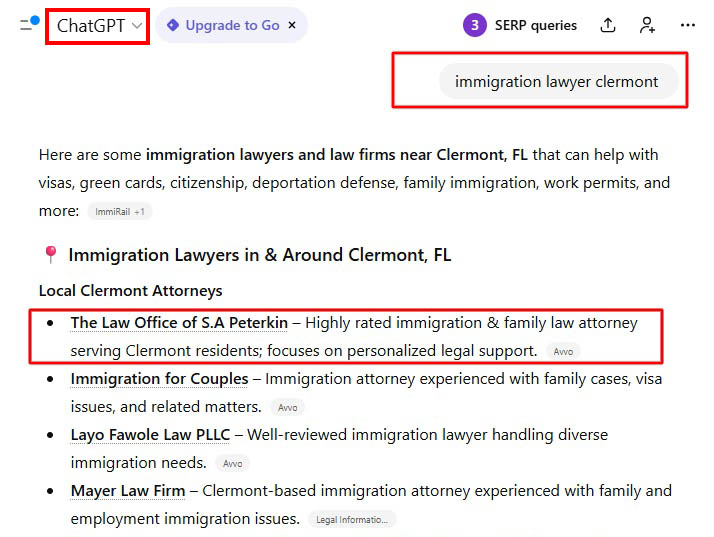
A 7-month Local SEO campaign that took The Law Office of S.A Peterkin from zero visibility to the #1 ranked immigration attorney in Clermont, Florida — generating 94 calls, 170% click growth, and a top recommendation on ChatGPT.
My SEO & Growth Process
I bring together the power of organic marketing and intuitive UX solution. I’m not just here to market your brand. I’m here to shape your website so it reflects your unique style and stays true to your brand guidelines.
Research & Audit
Strategy
Optimization & Tracking
Growth
If you want a more strategic approach to SEO, AI Search visibility, UX optimization, analytics tracking, and conversion-focused growth, let’s discuss your business goals and identify the right opportunities for long-term improvement.
Ready To Improve Your SEO, UX & AI Search Visibility?
Latest SEO & AI Search Insights
Local Landing Page SEO Guide: How to Create Location Pages That Build Local Relevance
Local Keyword Research Guide: How to Find Local SEO Keywords That Drive Real Customers
NAP Consistency for Local Businesses: Complete Guide in 2026
Local Citation Building Guide: How Citations Support Local Search Visibility
Google Maps SEO Guide: How to Improve Your Local Maps Visibility
Google Business Profile Optimization Guide: Improve Local Visibility and Generate More Leads
What Is Local SEO? A Beginner’s Guide to Local Search Visibility
UX SEO Best Practices: How Better User Experience Improves Rankings, AI Visibility, and Conversions
Do you have Questions?
AI Search Optimization is the process of improving your business’s visibility in AI-powered search experiences such as ChatGPT, Google AI Overview, Gemini, and Perplexity. It focuses on helping AI systems understand your business, services, expertise, and trustworthiness so your brand can be cited, recommended, and surfaced when users ask relevant questions.
AI systems discover businesses through multiple signals, including website content, structured data, brand mentions, business profiles, reviews, authoritative citations, and information available across the web. The stronger and more consistent these signals are, the easier it becomes for AI systems to understand and recommend your business when it matches a user’s search intent.
Traditional SEO focuses on improving rankings in search engine results pages such as Google Search. AI Search Optimization focuses on helping AI systems understand, trust, and recommend your business within AI-generated answers. While SEO and AI Search Optimization share many foundational elements, AI visibility relies more heavily on authority, entity recognition, content clarity, and trust signals across the web.
Yes. Businesses can appear in Google AI Overview when Google considers their content, expertise, and authority relevant to a user’s query. Improving topical authority, content quality, structured data, website experience, and overall trust signals can increase the likelihood of being referenced within AI-generated search results.
The timeline depends on your website’s current condition, competition, and industry. Most businesses begin seeing meaningful SEO improvements within 3 to 6 months. AI Search Optimization often develops alongside SEO efforts as authority, content, and trust signals strengthen over time. Sustainable growth is typically achieved through consistent optimization rather than quick fixes.
Local SEO is best for businesses that serve customers within specific cities, regions, or service areas. Nationwide SEO is designed for businesses targeting customers across an entire country. The right approach depends on your service area, business goals, and target audience. In some cases, businesses benefit from a combination of both strategies.
Search engines and AI systems want to recommend websites that provide a positive user experience. Factors such as website speed, mobile usability, clear navigation, content readability, and conversion-focused design help visitors find information more easily. A better user experience often leads to higher engagement, improved trust, and stronger SEO performance.
Analytics and tracking help measure what is working and identify opportunities for improvement. Tools such as Google Analytics 4, Google Tag Manager, and Search Console provide insights into traffic sources, user behavior, conversions, and search performance. This data allows SEO decisions to be based on real business outcomes rather than assumptions, leading to more effective optimization and better long-term results.